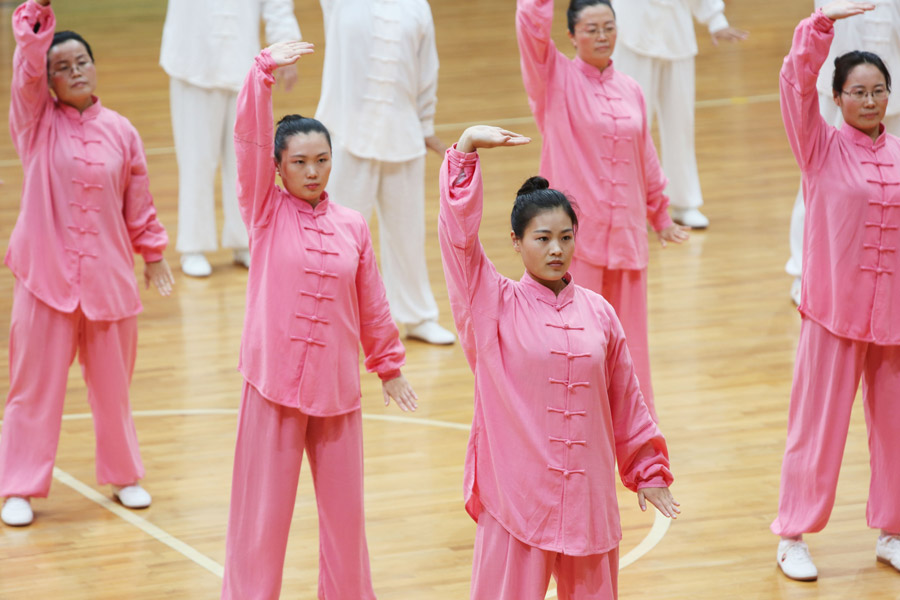
Chinese Qigong Exercise
Introduction
Chinese Qigong Exercise, often simply referred to as Qigong, is an ancient Chinese practice that integrates physical postures, breathing techniques, and focused intent. The term "Qigong" itself is derived from the Chinese words "qi," meaning energy or vital life force, and "gong," meaning work or cultivation. Thus, Qigong is fundamentally the practice of cultivating and balancing the body's energy through a series of exercises or meditative practices. Recognized for its ability to enhance health and vitality, Qigong has been a cornerstone of Chinese culture for centuries, manifesting in various forms across different regions and times. It is widely practiced not only in China but also globally, where it is appreciated for its health benefits, meditative qualities, and as a therapeutic exercise.
History
Ancient Origins
The origins of Qigong can be traced back over 4,000 years to ancient China. It is believed to have been influenced by the meditative and health practices of Taoism and Buddhism, as well as the martial arts traditions of ancient China. Early forms of Qigong were likely developed as a means to achieve harmony between the body and mind, and to promote spiritual enlightenment. The practice was initially rooted in the observations of nature and the cosmos, and it was closely linked to the Taoist philosophy that emphasizes living in harmony with the Tao, or the way of nature.
Development Through Dynasties
Throughout Chinese history, Qigong evolved and was refined through various dynasties. During the Han Dynasty (206 BC-AD 220), Qigong became more structured and formalized, with texts such as the Huangdi Neijing (Yellow Emperor's Inner Classic) documenting practices related to health and longevity. The practice continued to flourish during the Tang (618–907) and Song (960–1279) dynasties, where it was incorporated into the daily routines of the Chinese imperial court. In the Ming (1368–1644) and Qing (1644–1911) dynasties, Qigong further evolved, influenced by developments in Chinese medicine and martial arts. These periods saw the diversification of Qigong into various schools and styles, including medical, martial, and spiritual Qigong.
Philosophy and Principles
Key Concepts
The philosophy behind Qigong is deeply rooted in traditional Chinese medicine and Taoism. One of the key concepts of Qigong is the cultivation and regulation of "Qi" or life energy. Practitioners believe that Qi flows through the body along pathways known as meridians, and that maintaining a balanced and unobstructed flow of Qi is essential for health and well-being. Another fundamental principle is the integration of mind, body, and breath, which is achieved through meditative postures, controlled breathing, and mental focus. This unity is thought to enhance one's physical and mental health, as well as spiritual development.
Energy Flow and Balance
Qigong emphasizes the importance of maintaining a harmonious flow of energy throughout the body. The practice involves techniques that are designed to balance the yin and yang energies, which are considered complementary forces that exist in all aspects of life. When these energies are in balance, it is believed that the body is in a state of health and equilibrium, whereas imbalances may lead to illness or disharmony. Through gentle movements, focused breathing, and meditation, Qigong practitioners aim to cultivate and regulate their Qi, promoting a state of balance and well-being.
Types of Qigong
Medical Qigong
Medical Qigong is a branch of Qigong that focuses on health maintenance, disease prevention, and treatment. It involves exercises that are tailored to enhance the body's immune system, improve circulation, and stimulate the body's healing processes. Medical Qigong is often used as a complementary therapy in traditional Chinese medicine, and it is practiced both as a preventive health measure and a healing technique.
Martial Qigong
Martial Qigong, also known as "hard Qigong," is practiced to enhance martial arts skills. It involves exercises that increase physical strength, stamina, and resilience. Martial Qigong is used to condition the body, improve focus and mental clarity, and develop internal power, which can be applied in martial arts practice. It often includes more rigorous and intensive training compared to other forms of Qigong.
Spiritual Qigong
Spiritual Qigong emphasizes the cultivation of the mind and spirit. It is often practiced to achieve higher states of consciousness, spiritual enlightenment, and inner peace. Spiritual Qigong combines meditation, visualization, and breath control to promote spiritual growth and development. It is deeply connected to the philosophical and spiritual traditions of Taoism and Buddhism, which view Qigong as a tool for achieving spiritual harmony and insight.
Practice and Techniques
Breathing Techniques
Breathing is a central component of Qigong practice. The breathing techniques used in Qigong are designed to enhance the flow of Qi and support relaxation and concentration. Practitioners often use deep, slow, and rhythmic breathing patterns to help regulate the body's energy and promote relaxation. These breathing practices are synchronized with specific movements and postures to maximize their effectiveness.
Movement and Posture
Qigong involves a series of movements and postures that are designed to facilitate the flow of energy through the body. These movements are often gentle and fluid, promoting flexibility, balance, and coordination. Postures may be static or dynamic, and are performed with a focus on proper alignment and balance. The movements are typically performed in a slow and controlled manner, allowing practitioners to maintain awareness of their body and breath.
Meditation and Visualization
Meditation and visualization are integral parts of Qigong practice. Meditation in Qigong involves focusing the mind and cultivating a state of calm and clarity. Visualization techniques are often used to enhance the flow of Qi and to direct energy to specific areas of the body. Practitioners may visualize energy moving along the meridians, or imagine themselves surrounded by a healing light. These practices help to deepen the connection between mind and body, supporting both physical and mental health.








